November Revives Momentum for the Suez Canal: Return of Maersk and 14 Discounts Pave the Way for Strong Recovery
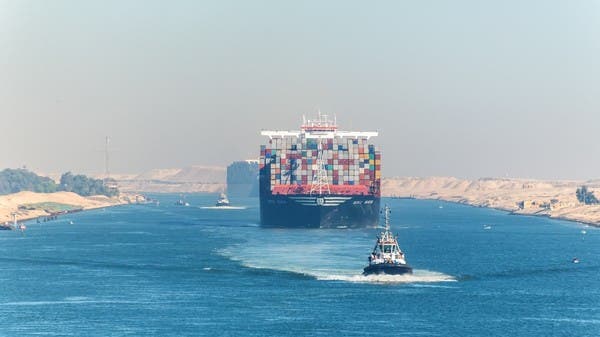
November 2025 witnessed a remarkable shift in the trajectory of the Suez Canal with stability returning.
SUMMARY
November 2025 witnessed a remarkable shift in the trajectory of the Suez Canal with stability returning.
KEY HIGHLIGHTS
- Return of Maersk shipping line to the canal
- Discounts recorded on ship fees
CORE SUBJECT
Suez Canal
November 2025 witnessed a remarkable shift in the trajectory of the Suez Canal, with stability returning to the Red Sea following the cessation of Houthi attacks, and rapid indicators of recovery in transit traffic and revenues. This comes alongside the announcement of the return of the Maersk shipping line to transit through the canal, and the launch of a wide package of discounts by the authority, totaling around 14 reductions during the month, in a move aimed at restoring pre-crisis levels and attracting more global shipping lines.
The Suez Canal Authority announced on November 17, according to data reviewed by Al Arabiya Business, 13 maritime publications carrying direct discounts on a large number of types of passing ships, in addition to a regulatory publication for the cost of fees for docking and staying of ships conducting logistical operations in the southern sector's anchorage areas, which ranged between 5 cents and 30 cents per ton per day depending on the load.
An Economic Leap in Egypt for the First Time in 3 Years: Quarterly Growth of 5.3%
The authority decided to extend the 13 discounts until June 30, 2026, including the discount granted to dry bulk cargo ships, liquefied natural gas carriers, crude oil tankers, petroleum product carriers, container ships, and car carriers for multiple destinations among global ports.
The Halt of Houthi Attacks Changes the Game
On November 11, the Houthis in Yemen announced the cessation of their attacks on Israel and ships in the Red Sea, in a message to Hamas. Houthi attacks on ships have stopped since the ceasefire in Gaza began on October 10, and since then, positive statements about the recovery of ship transit indicators and Suez Canal revenues have followed.
Many global shipping companies had been avoiding the Red Sea due to Houthi attacks, including COSCO, Hapag-Lloyd, Yang Ming, CMA-CGM, Evergreen, and oil tanker companies like Euronav and Frontline, which redirected their ships around the Cape of Good Hope. Companies have been following this route as a precautionary measure for security reasons.
In October, Egyptian Foreign Minister Badr Abdel-Aty stated during the opening of the Aswan Forum for Peace and Sustainable Development that Egypt's losses exceeded $9 billion in one year due to the sharp decline in imports and revenues from navigation through the Suez Canal.
Overcoming the Recession Phase and the Crucial Return of Maersk
The Egyptian Ministry of Planning and Economic Development revealed on Thursday the recovery of Egyptian economic indicators during the first quarter of the current fiscal year with a growth of 5.3% for the first time in over three years, noting that the Suez Canal Authority, an important source of national income, has achieved growth of 8.6% for the first time since December 2024, supported by the return of stability to the Red Sea region.
On Tuesday, the head of the Suez Canal Authority, Lieutenant General Osama Rabie, announced the signing of an agreement with the global shipping company Maersk for the full return of the company's fleet to transit through the canal again, after more than two years of disruptions that diverted shipping traffic away from the Red Sea route.
Rabie added that advanced discussions are underway with other global shipping companies for their return to the Suez Canal in the near future, confirming that the crisis over the past two years has proven the canal's ability to withstand despite declining revenues. He expects revenues to reach $4.1 billion during the current year, with the largest improvement anticipated in 2026, emphasizing the canal's full readiness to receive ships and return services to normal.
Lieutenant General Osama Rabie revealed that shipping traffic in the Suez Canal increased during October, with the number of passing ships reaching 1,136, while loads increased by 16%, and revenue in dollars rose by 15%. He explained that in November, the number of ships increased by 15%, loads rose by 26%, while revenue in dollars recorded a growth of 27%.
Virtual Currency: Suez Canal Fees Are Not in Dollars
For his part, the head of Maersk stated that progress in the peace process in Gaza encouraged the return of global trade freedom that had been threatened over the past two years, confirming that the Suez Canal is the preferred maritime passage for connecting markets.
The head of the authority had met in early November with representatives from 20 shipping lines and agencies to discuss developments in the Red Sea and Bab el-Mandeb region, inviting all shipping lines to conduct trial voyages for their container ships to transit through the Suez Canal.
Revenue Forecasts for 2026
For his part, Mustafa Shafie, head of the research unit at Arab Online, stated that there is indeed a positive impact on canal revenues due to the relative stability recently witnessed in the Red Sea, expecting to recover between 60% to 70% of revenues during 2026.
Economic expert Mohamed Anis agreed, predicting that revenues from the canal could reach between $6-7 billion next year if the geopolitical calm continues, gradually rising to $9-10 billion by 2027, especially with the return of major companies like Maersk and CMA.
Sarah Saada, chief macroeconomic analyst at CI Capital, stated that the cessation of Houthi attacks on the Red Sea represents a crucial step towards restoring navigation to its previous rates through the Suez Canal. She added to Al Arabiya Business that the return of navigation also depends on the resumption of major insurance companies' operations for ships transiting through the Red Sea, expecting this to happen in the near term.
In a sign of official optimism regarding future revenue improvements for the world's most important maritime passage, the Central Bank of Egypt raised its revenue forecasts for the Suez Canal during the twelve months from October 2025 to September 2026 to $4.56 billion, compared to previous forecasts of $3.8 billion for the period from September 2025 to October 2026.
An Additional Advantage Supporting Revenues
Hani Genina, head of the research unit at Ahli Pharos for Securities Trading, stated that the decline in the exchange rate of the US dollar has had a positive role on Suez Canal revenues, explaining that since the beginning of 2024 until mid-2025, the exchange rate of the SDR unit (the currency basket used by the Suez Canal to calculate fees) ranged around $1.32, but recently rose to $1.42, an increase of about 7.5%, which gives the authority an additional margin to compensate for the discounts offered to ships to encourage their return after a period of decline in shipping traffic.
He confirmed that the recovery in the number of passing ships since October 2025 coincides with this increase in the value of the currency used for collection, which constitutes a dual factor in supporting revenues. He predicted that the dollar would decline globally by between 5% to 10% over the next year, which would reflect an increase in revenue by the same percentage if ship transit rates remain at their current levels.
Cape of Good Hope Fees May Slow the Return
For his part, Amr Qattaya, head of Zenith Enterprise, stated that the delay of shipping companies in returning to transit through the Red Sea is not only related to security concerns but also due to some companies achieving high profits from the additional fees imposed on shipments passing around the Cape of Good Hope. Qattaya explained in an interview with Al Arabiya Business that part of this delay relates to the presence of Israeli shareholders in some shipping companies, making operational decisions more complex than just dealing with Houthi threats.
Qattaya pointed out that global shipping companies have conducted extensive discussions with the Suez Canal Authority, which in turn has offered privileges and facilities to encourage these companies to return to navigation in the Red Sea, confirming that companies have specific plans for returning, but their implementation depends on a mix of commercial and political considerations.
The Suez Canal is one of the most important maritime passages in global trade routes, with about 20% of container ships and approximately 12% of world trade passing through it before the Houthi attacks.
KEYWORDS
MENTIONED ENTITIES 3
Maersk
🏛️ OrganizationGlobal shipping company
Suez Canal Authority
🏛️ OrganizationAuthority responsible for managing the Suez Canal
Central Bank of Egypt
🏛️ OrganizationAuthority responsible for monetary policy in Egypt