Headline of "Al-Jumhuriya": Lebanon and Cyprus Sign Maritime Border Agreement... Egypt on Cooling Line and Warning of Pressures
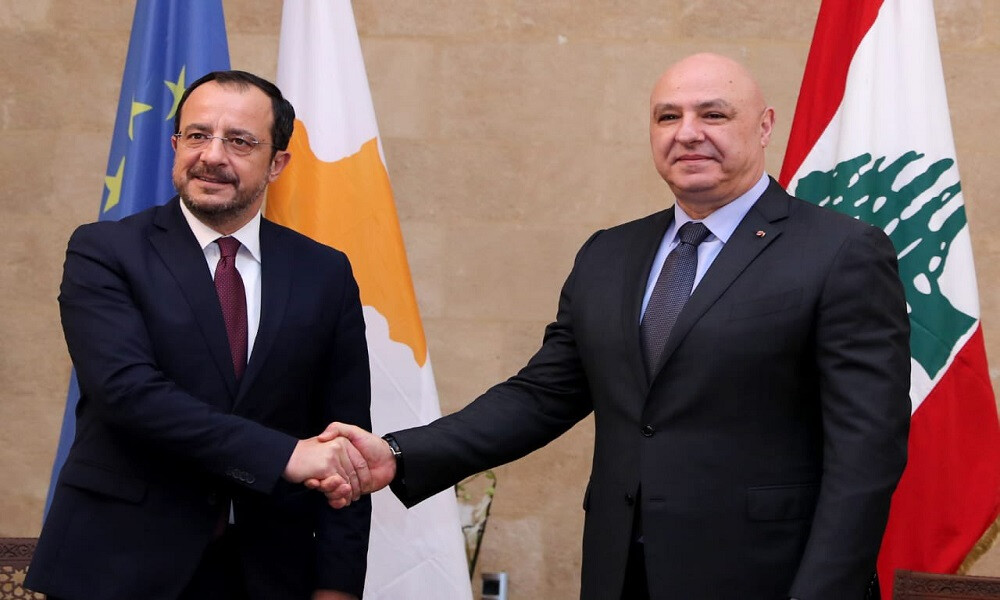
Lebanon is trying to find a political solution to the Israeli aggression amid escalating tensions.
SUMMARY
Lebanon seeks a political solution to the Israeli aggression amid escalating tensions from Israel and Hezbollah's refusal.
KEY HIGHLIGHTS
- Egypt supports Lebanon and works to calm the situation.
- Signing of the maritime border agreement between Lebanon and Cyprus.
CORE SUBJECT
Israeli-Lebanese Tensions
The overall scene is as follows: the Lebanese state is trying to knock on all external doors in search of a political solution to stop the Israeli aggression, while the movements and initiatives aimed at achieving this goal are caught in a vicious cycle, or rather in a dead end, pulled on one side by Israel's deliberate ignition of escalation sparks, its complete violation of Lebanese airspace, and its escalating threats, the latest being the threat from its Defense Minister "to act forcefully in Lebanon again if Hezbollah does not surrender its weapons," and its hinting at reconsidering the maritime demarcation agreement. On the other side, the party refuses to comply with the Israeli demand, asserting that it "is not concerned with any old or new proposals, as long as Israel does not adhere to the ceasefire agreement, and there is no room now for discussion on any topic before this agreement is implemented." It is worth noting that what is being offered to Lebanon is "either the continuation of killing or complete surrender to the enemy."
However, what stands out in recent hours is the renewed Egyptian movement through the visit of Egyptian Foreign Minister Badr Abdel Aty to Beirut and his meetings with senior officials, which reliable sources confirmed to "Al-Jumhuriya" that his visit, coinciding with intense internal and external communications to cool the atmosphere, aims to contain tensions, break the wall of escalation, and prevent any steps that would exacerbate it. Thus, he does not carry with him an initiative or any proposal for a solution in the south, but rather conveyed Egypt's confirmation of its support for Lebanon, its commitment to the country's security and stability, and emphasized that Lebanon must do everything that solidifies its security and stability and keeps it away from any escalation.
In statements after the meetings he held, Abdel Aty expressed his fear of any possibilities for escalation in Lebanon, confirming that we will not stop any effort to spare it from dangers.
He pointed out that "we are making intensive efforts to spare Lebanon any aggression. We are concerned with Lebanon's stability and the necessity of stopping Israel's violations of its sovereignty and territorial integrity. Egypt is utilizing its network of relations to support the de-escalation and implement the ceasefire agreement, push for a diplomatic solution, and work to defuse any potential conflict." He noted that Egypt supports President Aoun's initiative regarding the Lebanese army's readiness to take over all points in the south, and "the Lebanese government's decisions regarding the issue of weapon control," emphasizing that the authority of the state is very important. He stressed that it is necessary to build on President Aoun's vision to spare Lebanon from escalation: "We utilize our regional network of relations with all parties."
Abdel Aty considered that the Lebanese state and army have made great efforts in the south to establish state authority, and everyone should appreciate this. He warned that the entire region is on the brink of full escalation, which does not serve any party, and diplomacy is the solution. He added: "We all care about the security and stability of Lebanon. We respect the Lebanese decision in all its components, and everyone must rise to the level of responsibility and work to reduce escalation."
This closed scene adds an additional credit to the "bank of probabilities" threatening the country, and spreads in the atmosphere more anxious questions circulating in popular, political, and official circles, which have accelerated significantly after the Israeli aggression on the southern suburbs and the assassination of Hezbollah's security official Haitham Ali Al-Tabtabaei three days ago:
First, is there an opportunity for the success of any endeavor or initiative after Israel's bombing of President Aoun's initiative?
Second, how can any initiative, regardless of its source, lead to the crystallization of a diplomatic solution, as long as Hezbollah firmly refuses to give up its weapons?
Third, what is the result of the failure of efforts and initiatives, and in which direction will things lean?
Fourth, what is Israel aiming for by raising the level of escalation at this particular time? Is this escalation preparing the atmosphere for a military operation in Lebanon? Is there external cover for this operation, and more precisely, is there a green light from the U.S. for it?
Fifth, Hezbollah seems to deliberately keep its potential actions ambiguous, but can it respond to Israel, and does it still possess the strength and capabilities to do so?
Sixth, what if Hezbollah chooses not to respond, how will it justify that, especially in front of its environment?
Seventh, what if the party decides to respond, can it ensure that this response will have an impact on Israel? Does it have the capacity to bear the consequences of this response, whether on itself as an organization in its military and political aspects, or on its popular environment, or on Lebanon in general?
Eighth, the most important question, if the assassinations of Hezbollah cadres and elements that occurred since the announcement of the November agreement were carried out, as it is said, through what has come to be called "drone snipers" either randomly or by utilizing phone and artificial intelligence technologies, how did Israel succeed in assassinating the party's security leader Al-Tabtabaei - who is supposed to be surrounded by extreme secrecy - in the same way that the party's leaders were assassinated before and during the 66-day war? Is technology and artificial intelligence involved in the assassination, or is there a breach and malfunction in the party's security structure, moving within or around it guided by the naked eye?
The answers to these questions may reveal themselves in the coming days, and they could dispel the existing ambiguity and determine the path that things will take in the next phase.
However, despite the accumulated factors of anxiety in the Lebanese atmosphere, reinforced by Israeli assaults and threats, a senior official confirms to "Al-Jumhuriya" that "what is prevailing so far are external signals still coming from multiple sources, reducing the chances of wide escalation, and confirming that reaching a political solution is still a possibility."
The senior official pointed out that these signals generally come without any clarification on how to reach this solution or on what basis it will be built, or to specify a time frame for its achievement. He continued: "The atmosphere conveyed by the envoys from Americans and non-Americans is summarized by the concern for Lebanon's security and stability, pushing matters towards a political settlement, and excluding wide escalation due to the absence of a green light, specifically American, for any Israeli military action against Lebanon." He adds: "The Americans in their discussions with us confirm that their priority is Lebanon's stability and reaching a political solution that ends the aggression," and it is reported from one of the American officials that the United States has no interest in escalating the situation in Lebanon, warning that the U.S. has much to lose in Lebanon if the situation slips into escalation and a new war.
In response to a question, he clarified: "Everything is expected from Israel, and the situation is undoubtedly very difficult, but I do not say that we are on the brink of war and wide escalation, because Israel since the ceasefire agreement has continued its war on Lebanon, doing what it wants, violating the airspace, attacking and assassinating freely and without costs, reassured by the absence of deterrence, and the failure of the "mechanism" committee to perform its role as defined in its assigned mission, and it does not care about anything called the ceasefire agreement or Resolution 1701 or UNIFIL forces" (in this context, it is noted that UNIFIL reiterated yesterday that "Israel violates the blue line and Resolution 1701 and prevents the Lebanese army from deploying in the south").
However, despite the signals reducing the chances of escalation, French sources spoke of what they described as "serious concerns about the situation in southern Lebanon, and Israel's continued targeting of Lebanese areas," considering that it is very necessary to practically embark on the path of weapon control in the hands of the Lebanese state. The French position meets a more pessimistic picture drawn by Western diplomatic information conveyed to a senior official, warning of difficult conditions, and alerting that Lebanon may be heading towards a phase of severe pressures, necessitating the urgency of implementing the Lebanese government's decision to withdraw Hezbollah's weapons.
On another note, the presidential palace in Baabda witnessed yesterday the signing of the maritime border demarcation agreement between Lebanon and Cyprus, in the presence of President Joseph Aoun and Cypriot President Nikos Christodoulides, who arrived in Lebanon for this purpose.
President Aoun announced, "The celebration today comes as a culmination of the achievement of demarcating the exclusive economic zone between the two countries, opening the door for Lebanon and Cyprus to start exploring their maritime resources and enhancing joint cooperation in this field." He emphasized, "Adhering to the principles of international law strengthens friendships between nations, and the geography of the Mediterranean, as well as history and the future, unites Lebanon and Cyprus."
For his part, the Cypriot president stressed the importance of this development, describing it as a strategic achievement that reflects the level of relations between the two countries. He added, "The agreement is historic and constitutes a clear political message that Cyprus and Lebanon continue to invest in enhancing mutual trust and respect," noting that it opens wide horizons for future cooperation. He added that his country looks forward to "the new opportunities this agreement will provide for both countries, especially in the field of exploring maritime resources and developing economic partnerships in the Eastern Mediterranean."
President Aoun had received the American ambassador to Lebanon, Michel Aoun, and wished Ambassador Aoun success in his duties, emphasizing the importance of his role in enhancing relations between the two countries, given his knowledge of the situation in Lebanon and his ability to contribute to finding ways to assist Lebanon in the current circumstances.
President Aoun conveyed his gratitude to the American ambassador for the congratulations he received from President Donald Trump on the occasion of Independence Day, and for what he stated in his recent press conference about his desire to invite the Lebanese president to visit the United States, expressing President Aoun's gratitude for the invitation and his readiness to accept it.
KEYWORDS
MENTIONED ENTITIES 6
Hezbollah
🏛️ Political_PartyLebanese political and military party.
Egypt
📍 Location_CountryCountry in North-East Africa.
Lebanon
📍 Location_CountryCountry in Western Asia.
Cyprus
📍 Location_CountryIsland and country in the Eastern Mediterranean.
Joseph Aoun
👤 Person_MalePresident of the Lebanese Republic.
Badr Abdel Aty
👤 Person_MaleEgyptian Foreign Minister.