Achievements of the First Phase of the Comprehensive Health Insurance System from Its Launch in 2019 to 2025
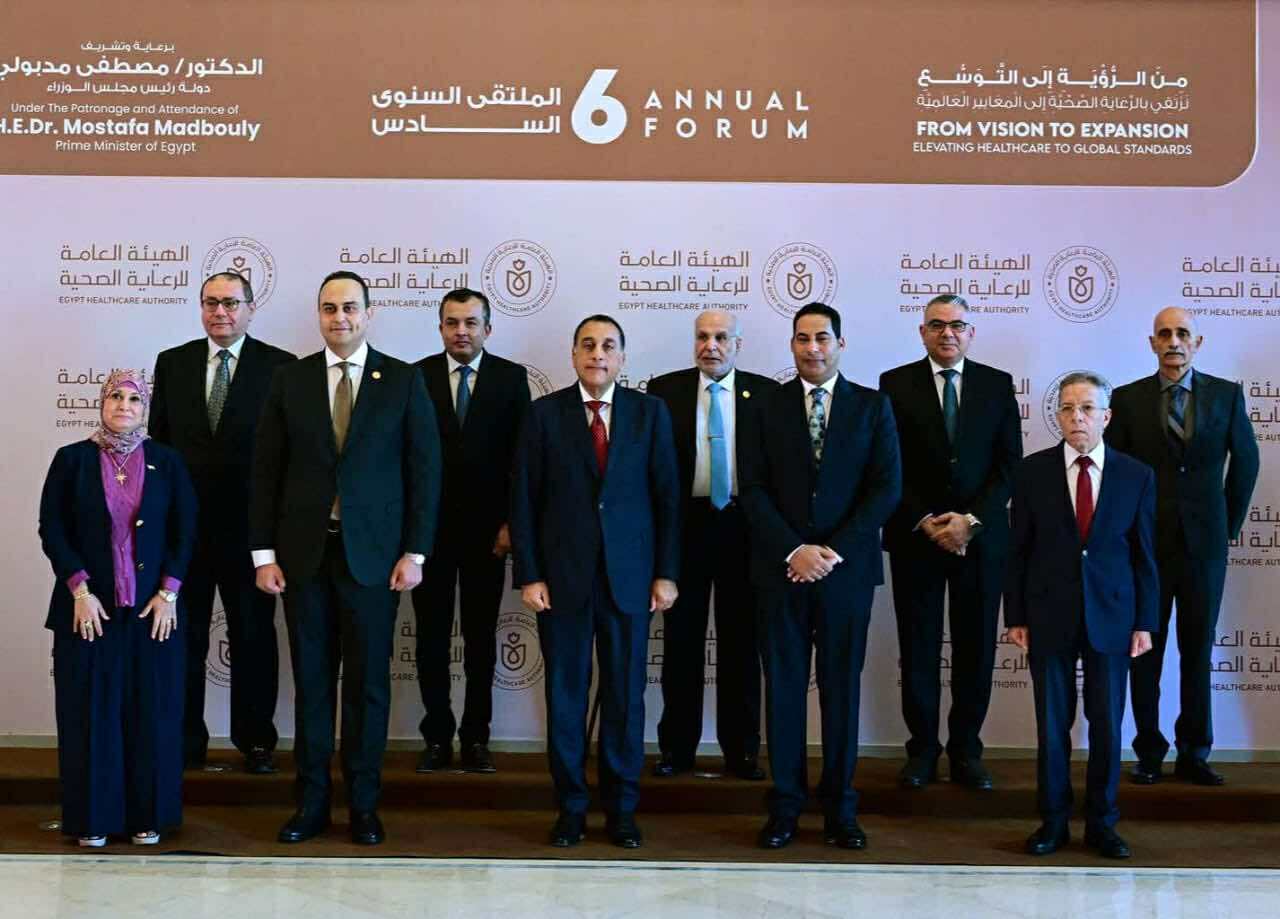
The activities of the sixth annual international forum of the authority under the slogan: "From Vision to Expansion."
SUMMARY
The sixth annual international forum of the General Authority for Health Care highlights the achievements of comprehensive health insurance.
KEY HIGHLIGHTS
- Registration of over 6 million electronic health records.
- Reduction of out-of-pocket health spending by 47%.
CORE SUBJECT
Comprehensive Health Insurance
Coinciding with the sixth anniversary of President Abdel Fattah El-Sisi's official launch of the Comprehensive Health Insurance System from Port Said on November 26, 2019, and under the patronage and presence of Dr. Mostafa Madbouly, Prime Minister, Dr. Ahmed El-Sobky, Chairman of the General Authority for Health Care and General Supervisor of the Comprehensive Health Insurance Project, launched the activities of the sixth annual international forum of the authority under the slogan: "From Vision to Expansion: Elevating Healthcare to Global Standards," held over two days on November 26 and 27 in the New Capital.
The forum witnessed high-level attendance, including advisors to the President, several Egyptian and African ministers, heads of health authorities, representatives of international organizations, ambassadors, thought and media leaders, and partners from the public, private, and civil sectors, reflecting Egypt's growing status as a regional and international healthcare hub.
In his opening speech, Dr. Ahmed El-Sobky began by expressing gratitude and appreciation to everyone who contributed to the success of the Comprehensive Health Insurance System, affirming that President Abdel Fattah El-Sisi is the historical leader of health reform in Egypt and behind every achievement realized on national soil.
He pointed out that the authority is today looking forward to a new phase that requires more work and effort to continue expanding the health system that guarantees every citizen's right to safe and high-quality services, through effective partnerships with government institutions and the private and civil sectors, while continuing cooperation with development partners at both regional and international levels.
He added that the current edition of the forum includes discussions on multiple axes, including sustainable health financing, enhancing partnerships between the public and private sectors, and opening avenues for innovation in healthcare, through 10 discussion sessions and 11 scientific lectures, in addition to launching the Sustainable Health Care Shield competition to promote the concept of green care, and signing more than twenty memoranda of understanding with governmental, private, and civil institutions to support strategic partnerships.
The chairman also emphasized that the human element is the cornerstone of the success of any health system, which is why the authority annually honors outstanding individuals and institutions, in recognition of their efforts and to support the continuation of creativity and innovation in the health system.
During his presentation, Dr. El-Sobky reviewed the most important achievements of the first phase of the Comprehensive Health Insurance System from its launch in 2019 to 2025, which included registering over 6 million electronic health records, reducing the percentage of out-of-pocket health spending by 47%, providing more than 100 medical and therapeutic services, performing over 800,000 surgical operations, achieving beneficiary satisfaction rates exceeding 86%, issuing more than 72 million electronic prescriptions, and achieving full automation of primary care facilities at 100% and 94% automation for hospitals, in addition to achieving a 95% accreditation rate for health facilities.
The benefits of implementing the system included gains at the level of the health sector, health institutions, service providers, the Egyptian citizen, and international cooperation.
El-Sobky explained that the gains in the health sector were achieved through enhanced governance, as the health system was restructured and governed, institutional building was developed, financing and sustainability systems were unified, funding sources were separated from service monitoring, and fragmentation of service providers was eliminated, with the private sector included in service provision. Additionally, 80% of services are provided within primary care facilities, along with the application of the family medicine model, activation of referral pathways at various levels, establishment of health planning, geographic redistribution of services, and creation of electronic health records.
He added that institutional gains included improving infrastructure, digital transformation, developing clinical operating systems, and enhancing financial operating indicators. In terms of infrastructure, the authority was able to accredit 300 facilities according to national quality standards GAHAR at a rate of 95% of the total received facilities, in addition to comprehensive automation of internal departments, radiology, laboratories, operations, emergency, oncology, dialysis, and outpatient clinics. Regarding clinical operating systems, clinical treatment protocols were unified, and health service quality indicators improved, as the average length of stay in internal departments decreased from 4.1 to 2.9 days, critical case mortality rates dropped from 29% to 17%, and the average number of monthly surgeries increased by 42%. The authority also witnessed a significant improvement in financial operating indicators through substantial growth in self-generated resources, reduction of treasury deficits, and improvement of foreign currency revenues.
The gains also included enhancing the efficiency of health service providers, as the past years saw an increase in employment retention rates by 91%, and the implementation of more than 86,000 training courses inside and outside Egypt in several countries with leading health experiences such as Zurich in Switzerland, Japan, France, Italy, and Singapore.
The chairman reviewed the gains for the Egyptian citizen from the implementation of the system, which included achieving 94% coverage of health services, localizing treatment, decentralizing service provision, activating the organ transplant program, and introducing advanced surgeries for the first time in several specialties. He also highlighted Egypt's growing role in medical tourism, as the authority's facilities provided therapeutic services to over 30,000 visitors from 120 countries, reflecting Egypt's regional and international status as a distinguished center for advanced healthcare.
He added that the authority obtained 7 major international accreditations during the past phase, including two accreditations from the Joint Commission International (JCI), two in the field of health sustainability (GGHH), two from the International Organization for Standardization (ISO), and one from the World Stroke Organization (WSO), in addition to several Arab and international awards, most notably the awards from the International Hospital Federation and the Arab Hospitals Federation.
El-Sobky explained that the lessons learned from the first phase include increasing the efficiency of spending on infrastructure while maintaining the quality of systems, involving the private sector in pharmacy and care services, expanding virtual services and artificial intelligence, developing home care services, and operating preventive medicine using wearable smart devices, in addition to launching the national family medicine program and linking it to residency training programs. He also indicated readiness to start implementing the system in the provinces of the second phase, starting with Minya Governorate in 2025, continuing the expansion of the system's implementation across the republic.
In conclusion, Dr. Ahmed El-Sobky affirmed that what has been achieved would not have happened without the directives of His Excellency President Abdel Fattah El-Sisi, the support of the Prime Minister, and the integration of state institutions' efforts, expressing gratitude to His Excellency Dr. Khaled Abdel Ghaffar, Deputy Prime Minister for Human Development and Minister of Health and Population, for his continuous support. He concluded by saying: "We pledge to the state and the political leadership that medicine remains a message in our belief, not just a profession, and that healthcare remains a national mission, until comprehensive health insurance becomes a tangible reality for every citizen in all governorates of Egypt."
On the sidelines of the forum's activities, Dr. Ahmed El-Sobky presented shields and commemorative gifts to several ministers, governors of the first phase, and health sector leaders, in appreciation of their contributions to the success of the Comprehensive Health Insurance System. The forum represents a platform to highlight qualitative developments in the healthcare sector and to enhance the role of the General Authority for Health Care as a fundamental pillar of the system, continuing reform and development efforts to ensure advanced and sustainable health services for all citizens.
KEYWORDS
MENTIONED ENTITIES 3
Dr. Ahmed El-Sobky
👤 Person_MaleChairman of the General Authority for Health Care
President Abdel Fattah El-Sisi
👤 Person_MalePresident of the Republic
Dr. Mostafa Madbouly
👤 Person_MalePrime Minister